

By Dr. Thulasi Shanmukanathan, Board-Certified Family Physician. Medically reviewed by Dr. Thulasi Shanmukanathan
Many men are surprised to learn that they aren’t sterile the moment they leave the clinic. Understanding vasectomy fertility after procedure day is one of the most important parts of the whole process, because it decides when you can safely stop using other birth control.
In this article, we walk through the fertility timeline, explain why you stay fertile at first, and cover what options exist if your plans change years later.
When Are You Sterile After a Vasectomy? The Short Answer
You aren’t sterile right away. Sperm remain in the tubes beyond the blocked vas deferens and can take a couple of months, and many ejaculations, to clear. You’re considered sterile only after a semen analysis confirms no sperm or only rare non-moving sperm. Until then, use backup birth control.
What Does the Fertility Timeline Look Like?
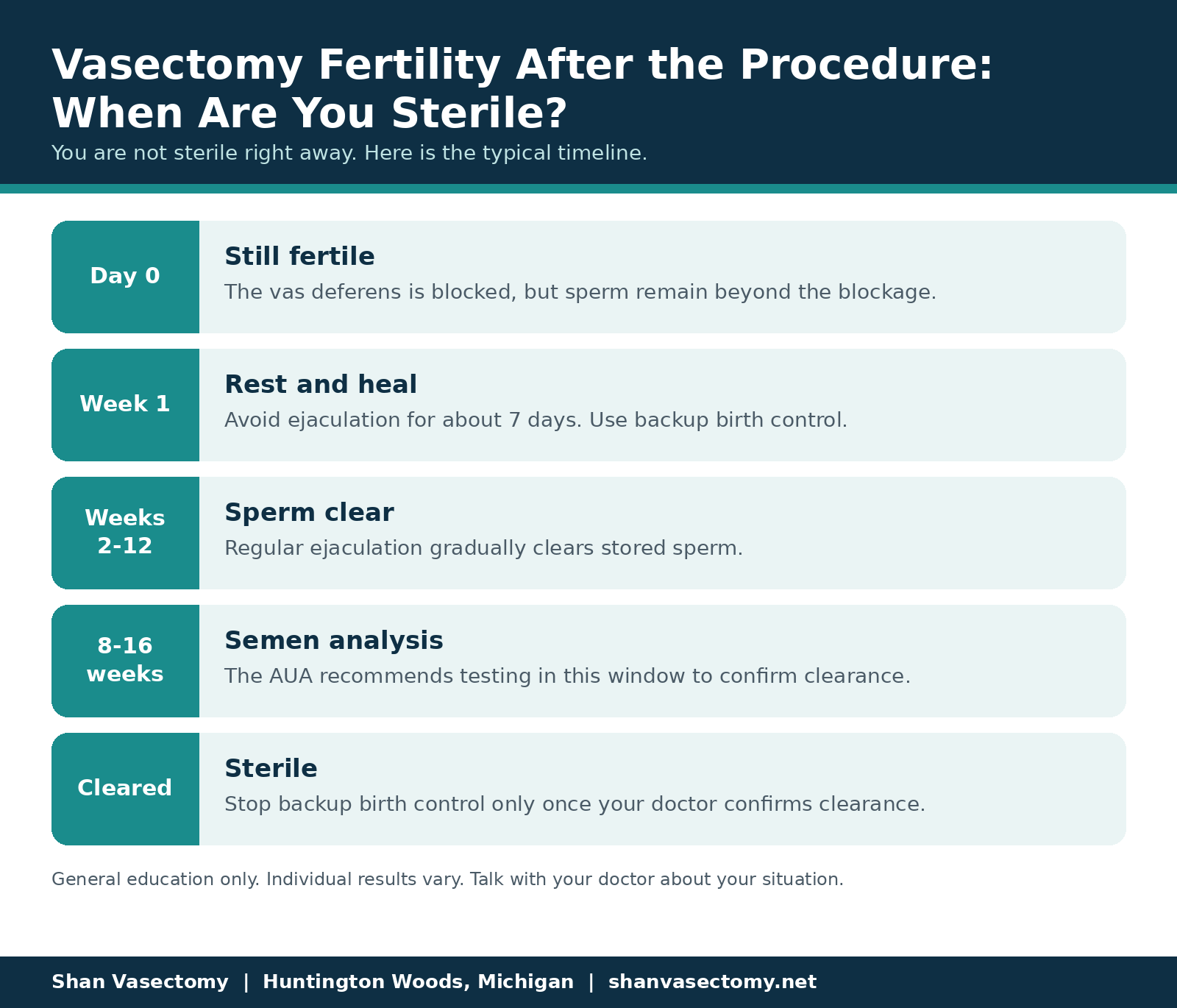
Every man clears sperm at a slightly different pace. This general timeline shows how vasectomy fertility after procedure day usually unfolds.
| Stage | What’s Happening | Birth Control Needed?
|
| Procedure day | Vas deferens blocked; sperm still stored beyond the block | Yes |
| First week | Rest and healing; avoid ejaculation for about 7 days | Yes |
| Weeks 2 to about 12 | Regular ejaculation gradually clears stored sperm | Yes |
| Semen analysis | Lab checks a sample for sperm | Yes, until results are back |
| Clearance confirmed | Doctor confirms the result meets clearance criteria | No, once your doctor says so |
The American Urological Association vasectomy guideline recommends a semen analysis about 8 to 16 weeks after the procedure. Testing details and how to read your results are covered in sperm count after vasectomy.
Why Are You Still Fertile at First?
A vasectomy blocks the vas deferens, the tubes that carry sperm from the testicles. But sperm already past the blocked point are still stored further along the reproductive tract.
Those sperm don’t disappear on their own right away. They leave the body gradually with each ejaculation. That’s why the timeline for vasectomy fertility after procedure day is measured in weeks and ejaculations, not hours.
How Long Do You Need Backup Birth Control?
The most practical rule for vasectomy fertility after procedure day is simple: keep using another reliable form of birth control until your doctor confirms your semen analysis results. Don’t rely on counting weeks or ejaculations alone, because some men take longer to clear.
Condoms, hormonal birth control, or an IUD all work as backup. The CDC’s overview of contraception lists options and how effective each one is.
Skipping the test is one of the most common reasons for unexpected pregnancies; read more about whether you can get pregnant after a vasectomy.
Can Fertility Return on Its Own?
Rarely. Questions about vasectomy fertility after procedure recovery often come back to this. In a small number of cases, the cut ends of the vas deferens can reconnect, a process called recanalization. This can happen early, before clearance, or very rarely years later.
Early failures are usually caught by the semen analysis. Late recanalization is very uncommon. For the numbers behind how often vasectomies fail, see vasectomy success rate.
What Are Your Options If Plans Change?
Life can change after a vasectomy, and vasectomy fertility after procedure day isn’t always the end of the story. If you later want biological children, there are several paths.
| Option | How It Works | Things to Consider
|
| Vasectomy reversal | Surgeon reconnects the vas deferens | Specialist microsurgery; success varies |
| Sperm retrieval with IVF/ICSI | Sperm taken from the testicle or epididymis and used in IVF | Partner needs IVF; can be costly |
| Banked sperm | Sperm frozen before the vasectomy is thawed and used | Must be arranged before the procedure |
The Mayo Clinic’s overview of vasectomy reversal explains how the surgery works and what affects success. If you’d like a backup plan before your procedure, learn how long sperm can be frozen and stay viable.
Frozen sperm can last a long time. One case report described a live birth using sperm stored for 26 years.
Does Time Since Your Vasectomy Affect Your Odds?
Yes. Reversal success generally drops the longer it has been since the vasectomy. Over time, pressure can build in the tubes, and other changes may make reconnection less effective.
Your partner’s age also matters a great deal, especially for IVF-based options. These factors are why we encourage men to make the decision only when they’re sure.
Why Should You Treat a Vasectomy as Permanent?
Even though reversal and IVF exist, neither is guaranteed. Both can be expensive, and insurance often doesn’t cover them. The safest mindset is to treat a vasectomy as permanent birth control.
If you’re still unsure, take your time. Thinking through the question of should I get a vasectomy carefully now can save regret later.
FAQs
How Soon After a Vasectomy Are You Infertile?
Not right away. Sperm stored beyond the blocked tubes needs to clear, which usually takes a couple of months and many ejaculations. You’re only considered infertile once a semen analysis confirms clearance, so keep using backup birth control until then.
Can You Get Someone Pregnant Right After a Vasectomy?
Yes. Right after a vasectomy, sperm are still present in the semen. Pregnancy is possible until a semen analysis confirms clearance. Use another reliable form of birth control until your doctor tells you it’s safe to stop.
How Many Ejaculations Does It Take to Clear Sperm?
It varies from man to man. Many men clear sperm after several weeks of regular ejaculation, but counting alone isn’t reliable. The only way to know you’re sterile is a semen analysis, usually done around two to four months after the procedure.
Can a Vasectomy Reverse Itself?
Very rarely. The ends of the vas deferens can reconnect, which is called recanalization. It’s most often caught early by the semen analysis. Late recanalization years later is uncommon, but it’s one reason no birth control method is 100% effective.
Can You Still Have Kids After a Vasectomy?
It may be possible through a vasectomy reversal, sperm retrieval with IVF, or previously banked sperm. None of these options is guaranteed, and success depends on factors like time since the vasectomy and your partner’s age. Treat a vasectomy as permanent.
Should I Freeze Sperm Before a Vasectomy?
It’s worth considering if there’s any chance you’ll want biological children later. Banking sperm beforehand gives you an option that doesn’t require reversal surgery. Talk with a sperm bank about costs and storage, and make the decision before your procedure date.
Sterile on Paper, Not on Day One
Vasectomy fertility after procedure day follows a predictable path. You stay fertile for a while, sperm clear gradually, and a semen analysis confirms when you’re sterile. Keep using backup birth control until then, and treat the decision as permanent, even though options exist if life changes.
If you’re ready to talk through the process, book a consultation with Dr. Shan. She’ll explain the timeline and testing steps so you know exactly what to expect.