
By Dr. Thulasi Shanmukanathan, Board-Certified Family Physician. Medically reviewed by Dr. Thulasi Shanmukanathan
For many men, the biggest worry about a vasectomy isn’t the procedure itself. It’s whether it will change things in the bedroom. Will erections stay the same? Will desire fade? Will orgasms feel different?
These are common and completely understandable questions. In this article, we look at vasectomy and sexual function one piece at a time, explain what the research shows, and cover why a small number of men notice changes and what to do about them.
Does a Vasectomy Affect Sexual Function? The Short Answer
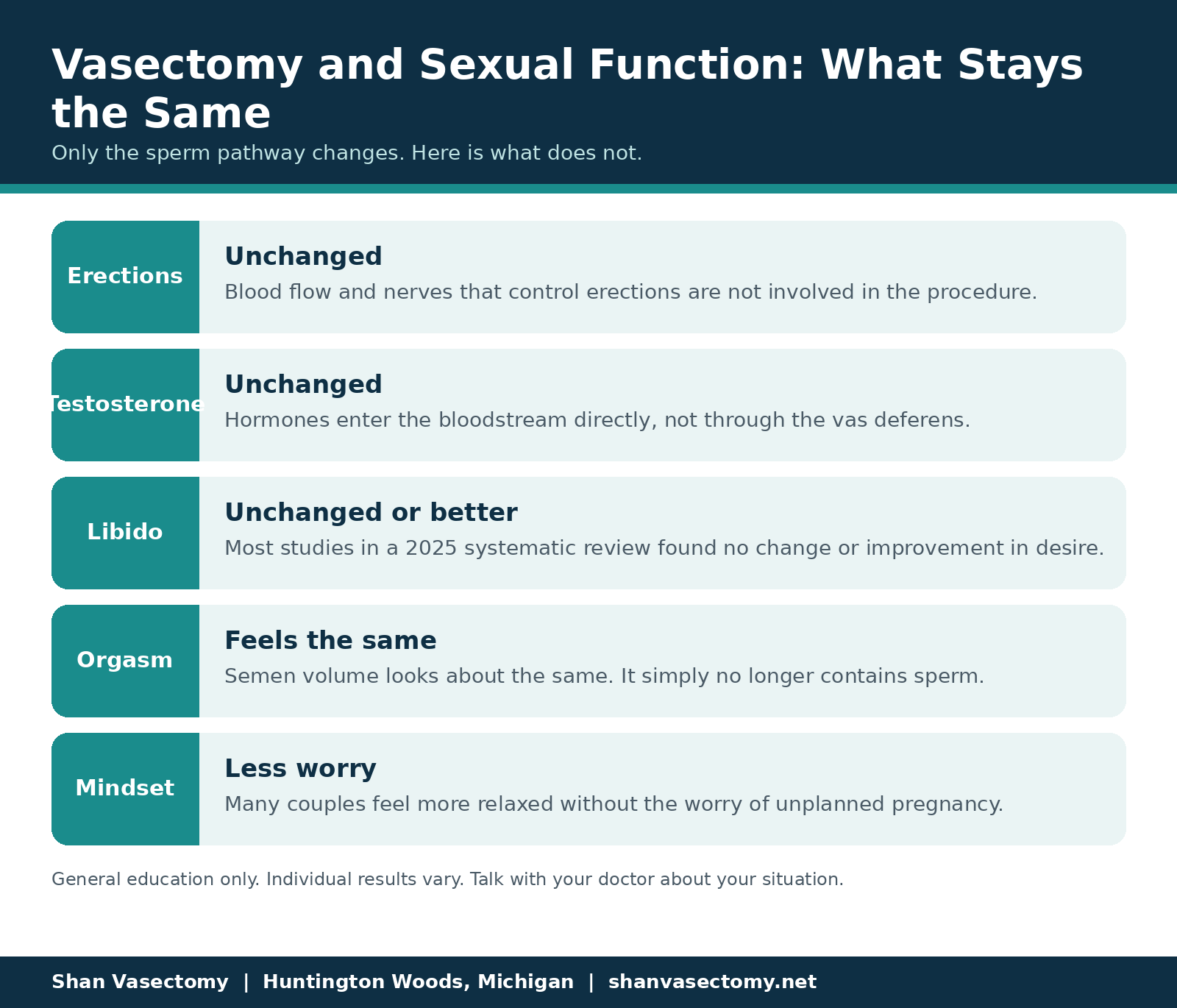
No, a vasectomy doesn’t change erections, sex drive, testosterone, or the ability to orgasm. The procedure only blocks the vas deferens, the tubes that carry sperm. Hormones, nerves, and blood flow involved in sex aren’t affected, and research shows sexual function stays the same or improves for most men.
Will a Vasectomy Affect Your Erections?
Erections depend on blood flow to the penis, nerve signals, and hormones. A vasectomy doesn’t touch any of these. The vas deferens sit in the scrotum, well away from the structures that control erections.
A 2025 systematic review on vasectomy and sexual function found that across the studies that measured erectile function, results showed either no change or improvement after vasectomy. None of those studies reported worse erections.
Does a Vasectomy Change Sex Drive or Testosterone?
Testosterone is produced in the testicles and released directly into the bloodstream. It doesn’t travel through the vas deferens, so blocking those tubes doesn’t stop it from reaching the rest of your body.
Research going back decades supports this. An early study on the endocrine effects of vasectomy examined hormone levels in men before and after the procedure. In the 2025 review, most studies of sexual desire found no change, and several found improvement. If you’re curious how this differs from procedures that do affect hormones, read about vasectomy vs. castration.
Will Orgasm and Ejaculation Feel Different?
Orgasm should feel the same. You’ll still ejaculate, and the volume looks about the same, because most semen comes from the seminal vesicles and prostate, not the testicles. Sperm make up only a small part of semen.
The difference is that, once your semen analysis confirms clearance, your semen no longer contains sperm. You can’t see or feel that change. The systematic review found no change in ejaculatory function across the studies that measured it.
Does a Vasectomy Change Sensation?
The nerves responsible for sensation during sex aren’t involved in a vasectomy. Most men notice no difference in physical sensation once they’ve healed.
Some men feel mild tenderness in the scrotum for a week or two while recovering. That’s part of healing, not a lasting change to sexual sensation. Practical guidance on resuming intimacy is covered in sex after vasectomy.
How Do Psychological Factors Play a Role?
The mind matters as much as the body in vasectomy and sexual function. For many couples, a vasectomy removes a source of stress. Without worrying about unplanned pregnancy, some men and their partners feel more relaxed and spontaneous. That may help explain why several studies found improved satisfaction after the procedure.
This is one of the less obvious vasectomy benefits. Peace of mind can make sex more enjoyable for both partners.
Why Do Some Men Report Changes?
A small number of men do notice changes after a vasectomy. Understanding the link between vasectomy and sexual function means looking at why that happens, since it’s rarely caused by the procedure itself.
| Possible Cause | What’s Going On
|
| Anxiety or worry | Fear that something has changed can affect arousal and performance |
| Ongoing pain | Rare chronic scrotal pain can make sex uncomfortable |
| Unrelated health issues | Age, diabetes, heart disease, medications, or stress can affect erections and desire |
| Relationship factors | Mixed feelings about the decision can affect intimacy |
Rarely, men develop post-vasectomy pain syndrome, which can make sex uncomfortable. A review of post-vasectomy pain syndrome describes the condition and its treatment options.
When Should You See a Doctor?
Questions about vasectomy and sexual function deserve a real answer. Talk to your doctor if you notice persistent changes in erections, desire, or comfort during sex. A new erection problem can sometimes be an early sign of heart disease or diabetes, so it’s worth checking rather than assuming it’s the vasectomy.
You should also reach out if you have scrotal pain that lasts beyond the normal healing period, or if worry about the procedure is affecting your relationship. Help is available, and most causes are treatable.
What Does the Research Say About Vasectomy and Sexual Function?
The 2025 systematic review pulled together studies on male and female sexual function after vasectomy. It concluded that most areas of sexual function were unaffected or improved. That included erectile function, desire, orgasm, and satisfaction.
That aligns with guidance from the American Urological Association, which lists vasectomy as a safe and effective form of permanent contraception. If you’re weighing the decision overall, compare the vasectomy pros and cons side by side.
Vasectomy and Sexual Function FAQs
Can a Vasectomy Cause Erectile Dysfunction?
No. A vasectomy doesn’t affect the blood flow, nerves, or hormones that control erections. Research shows erectile function stays the same or improves for most men. If you notice erection problems afterward, speak with your doctor about other possible causes, such as stress, medications, or heart health.
Does a Vasectomy Lower Testosterone?
No. Testosterone is made in the testicles and released directly into the bloodstream, not through the vas deferens. Blocking those tubes doesn’t change hormone production. Studies have not found a meaningful drop in testosterone after vasectomy.
Will My Partner Notice a Difference After My Vasectomy?
Most partners notice no physical difference. Semen looks and feels about the same, because sperm make up only a small part of it. Some couples report feeling more relaxed during sex once they no longer worry about pregnancy.
Does a Vasectomy Make You Last Longer or Shorter in Bed?
There’s no evidence that a vasectomy changes how long you last during sex. The procedure doesn’t affect the nerves or reflexes involved in ejaculation. Any change in timing is more likely related to stress, health, or relationship factors.
Is It Normal to Feel Anxious About Sex After a Vasectomy?
Yes, some men feel a little nervous the first few times. That’s normal and usually fades quickly. If anxiety lingers or affects your sex life, talking with your doctor or a counselor can help you feel confident again.
Can a Vasectomy Improve Your Sex Life?
For some couples, yes. Removing the worry about unplanned pregnancy can make sex feel more relaxed and spontaneous. Several studies in a 2025 systematic review reported improved satisfaction, desire, or orgasm after vasectomy, though many men simply notice no change.
Same Man, Same Function, Less Worry
When it comes to vasectomy and sexual function, the evidence is reassuring. Erections, desire, testosterone, orgasm, and sensation stay the same for the vast majority of men, and some couples find their sex lives improve. If you do notice a change, it’s worth a conversation, because the cause is usually something else and often treatable.
If you have questions about how a vasectomy might affect you, book a consultation with Dr. Shan. She’s happy to answer them openly and without judgment.