
By Dr. Thulasi Shanmukanathan, Board-Certified Family Physician. Medically reviewed by Dr. Thulasi Shanmukanathan
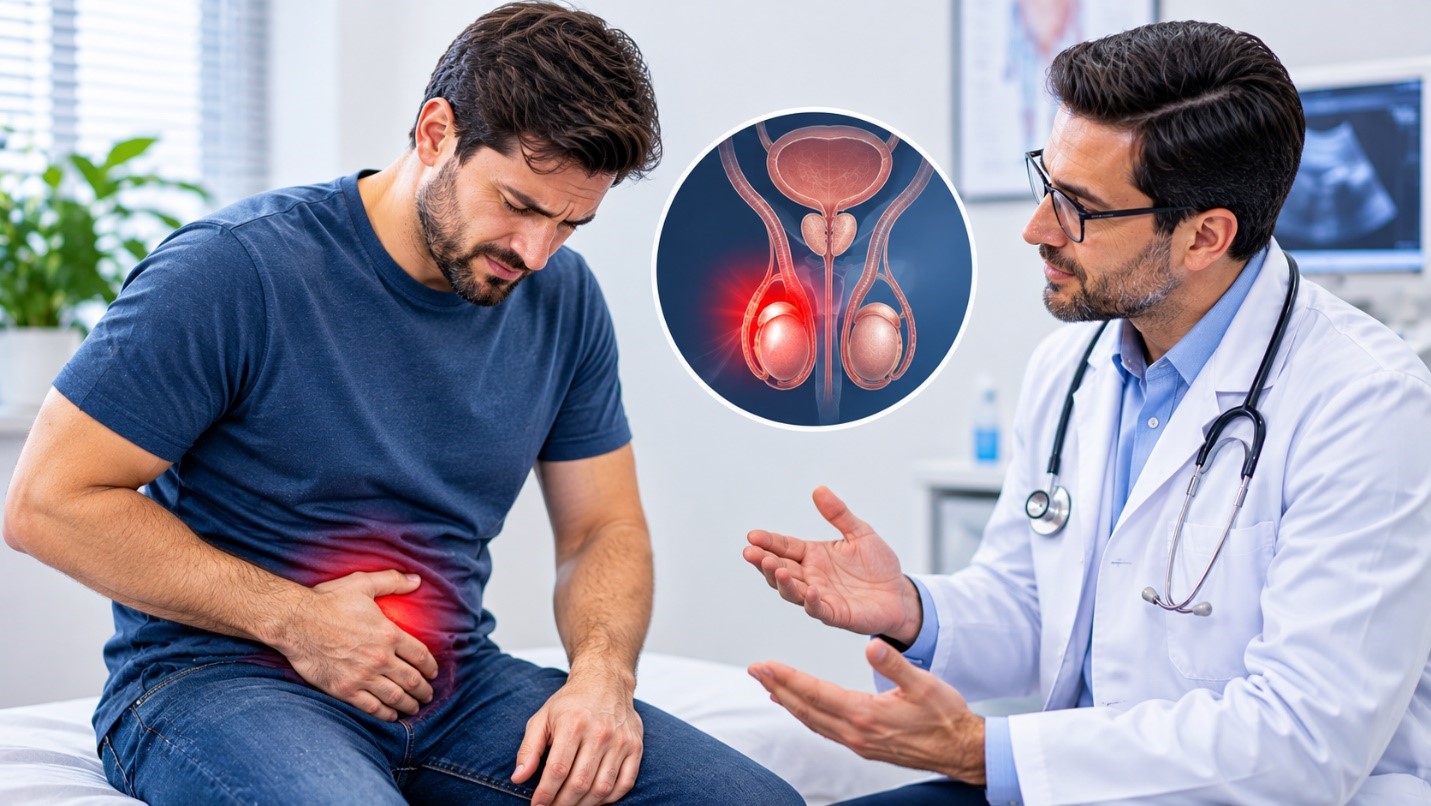
Some soreness after a vasectomy is normal. A small number of men, though, notice pain that lingers for months instead of fading in a week or two. That longer-lasting problem has a name: post-vasectomy pain syndrome, often shortened to PVPS.
We want every patient to understand this risk honestly before their procedure. Below, we explain what PVPS is, how often it happens, what causes it, and the step-by-step treatments available if it does. We’ll also help you tell the difference between expected healing and pain that deserves a closer look.
What Is Post-Vasectomy Pain Syndrome (PVPS)?
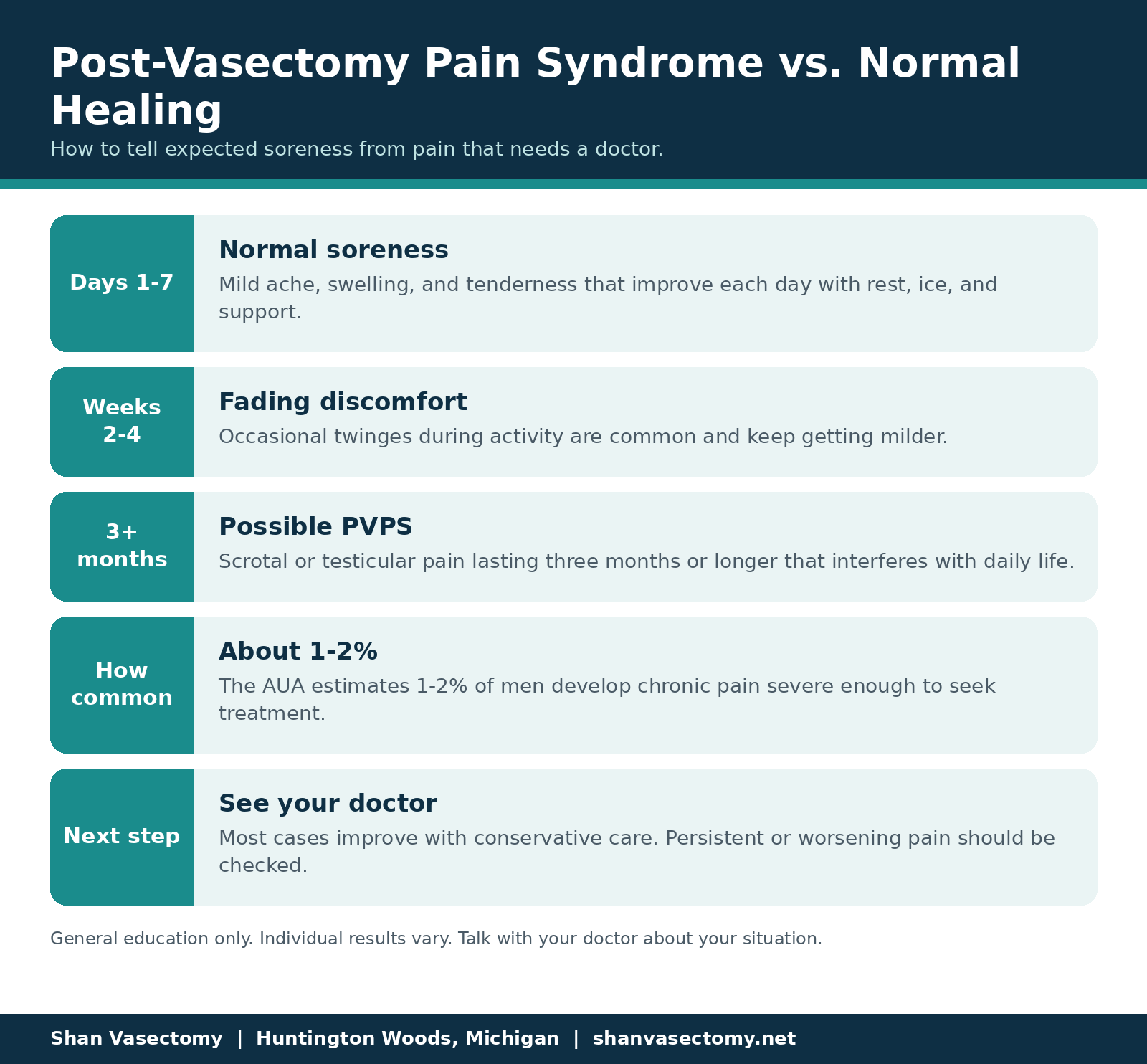
Post-vasectomy pain syndrome is scrotal or testicular pain that lasts three months or longer after a vasectomy and interferes with daily life. The American Urological Association estimates that 1–2% of men develop chronic pain severe enough to seek treatment. Most cases improve with conservative care.
The pain can be constant or come and go. Some men feel it during exercise, sex, or ejaculation, while others notice a dull ache when sitting for long periods.
How Common Is Post-Vasectomy Pain Syndrome?
Mild, short-lived discomfort is common in the weeks after any vasectomy. Pain that lasts beyond three months and affects quality of life is far less common. The AUA vasectomy guideline places it at about 1–2% of patients.
Studies that count any lingering discomfort, even occasional and minor, report higher numbers. That’s why it helps to separate “I notice something now and then” from pain that changes how you work, exercise, or sleep. Only the second group fits the clinical picture of PVPS.
How Can You Tell Normal Healing Soreness From PVPS?
Timing is the clearest clue. Acute pain from the procedure improves day by day, while PVPS persists or returns long after the incision has healed. For a full picture of short-term discomfort, see our article on pain during and right after a vasectomy.
What’s Expected in the First Week?
In the first few days, you may have a dull ache, mild swelling, and some bruising around the puncture site. Most men manage this with rest, snug supportive underwear, and acetaminophen as directed. Our normal post-vasectomy care instructions cover each of these steps.
Some men also feel a brief flare of tenderness weeks later as the body adjusts to reabsorbing sperm. That’s usually temporary and settles on its own.
Which Red Flags Need Prompt Care?
Call us or seek care right away if you notice fever or chills, redness that spreads, swelling that grows quickly, pus or foul-smelling drainage, or severe pain that pain relievers don’t touch. These signs point to infection or bleeding, not PVPS, and they need attention the same day.
What Causes Chronic Pain After a Vasectomy?
Researchers don’t point to a single cause. Most experts believe several mechanisms can contribute, sometimes in combination, as described in a peer-reviewed review of PVPS.
Epididymal Congestion
The testicles keep making sperm after a vasectomy. In a small number of men, pressure builds in the epididymis, the coiled tube behind each testicle, causing a full or aching feeling.
Sperm Granuloma
A sperm granuloma is a tiny swelling that develops when sperm escapes from the severed end of the vas deferens, prompting a response from the body. Many granulomas are painless, but some become tender.
Nerve Irritation or Entrapment
Small nerves run alongside the vas deferens. Scar tissue or inflammation can irritate or trap these nerves, which may produce sharp, burning, or radiating pain.
Inflammation or Low-Grade Infection
Ongoing inflammation, or occasionally a lingering infection such as epididymitis, can also cause long-lasting discomfort. A doctor can check for these with an exam and, when needed, lab tests.
What Are the Risk Factors, and Can PVPS Be Prevented?
There’s no proven way to eliminate the risk entirely. Some research suggests men who had testicular pain before their procedure may be more likely to have pain afterward, so it’s worth mentioning any history at your consultation.
Careful technique and early reporting both matter. A no-scalpel approach involves less tissue handling, and an experienced doctor can minimize trauma to the surrounding nerves. Telling us early about pain that isn’t improving lets us start simple treatments sooner.
How Is Post-Vasectomy Pain Syndrome Diagnosed?
The assessment begins with a thorough medical history and a physical examination. A clinician will ask when the pain began, what makes it better or worse, and whether it spreads to the groin or abdomen. They’ll feel for tenderness, granulomas, or swelling in the epididymis.
An ultrasound may be ordered to rule out other conditions, such as a hernia, varicocele, or testicular problem. PVPS is usually a diagnosis of exclusion, which means other causes are ruled out first. A urologist typically leads evaluation when pain persists.
What Are the PVPS Treatment Options, Step by Step?
Treatment usually moves from the least invasive options to more involved ones. Most men never need surgery.
- Conservative care: anti-inflammatory medication, support, rest, and activity changes.
- Nerve-targeted medication or a spermatic cord block.
- Microsurgical denervation of the spermatic cord.
- Vasectomy reversal, or less often other surgery, for selected cases.
Conservative Care (NSAIDs, Support, Activity Changes)
The first step is often a course of anti-inflammatory medication for several weeks, along with supportive underwear, warm baths, and avoiding activities that trigger pain. Some men also benefit from pelvic floor physical therapy. Many improve at this stage.
Nerve Blocks
If pain continues, a doctor may inject local anesthetic around the spermatic cord. This can relieve pain and also helps show whether surgery targeting the nerves is likely to help. Some clinicians also try medications that calm nerve pain.
Microsurgical Denervation
In this outpatient surgery, a urologist carefully divides the small nerves around the spermatic cord while preserving blood flow. Published case series, including this study of microdenervation for PVPS, report meaningful relief for many patients, though results vary.
Vasectomy Reversal for Pain
Reconnecting the vas deferens can relieve pressure-related pain in some men. Single-center studies report high rates of improvement, but reversal is a bigger procedure and restores fertility, which may not be wanted. If future fertility is part of the question, we cover fertility options if plans change in a separate article.
How Should You Put the Risk in Perspective?
Every medical procedure carries some risk, and chronic pain is the one we discuss most carefully at consultation. Roughly 98 out of 100 men won’t experience it, and most of those who do improve with non-surgical care.
For balance, it’s worth weighing this alongside the other benefits and trade-offs in our vasectomy pros and cons overview. Compared with tubal surgery, vasectomy is less invasive and has a lower complication rate overall.
When Should You Call Your Doctor?
Contact us if pain is getting worse instead of better after the first week, if it hasn’t settled within a few weeks, or if it interferes with work, sleep, or sex. If pain persists past three months, we’ll help you arrange evaluation with a urologist.
Don’t wait it out quietly. Earlier treatment is simpler, and you deserve answers.
Post-Vasectomy Pain Syndrome FAQs
What Is Post-Vasectomy Pain Syndrome?
Post-vasectomy pain syndrome is chronic pain in the scrotum or testicles that lasts at least three months after a vasectomy. It can be constant or intermittent, and it often affects activities like exercise, sitting, or sex. It’s uncommon, and most men who develop it improve with conservative treatment.
How Common Is PVPS?
The American Urological Association estimates that about 1–2% of men develop chronic scrotal pain severe enough to need treatment after a vasectomy. More men report occasional mild discomfort, but that typically doesn’t affect daily life and doesn’t meet the clinical definition of PVPS.
How Long Does PVPS Last?
It varies widely. Some men improve within months of starting conservative care, while others have symptoms for longer and need further treatment. Because outcomes differ, we recommend early evaluation rather than waiting, so the right treatment can start as soon as possible.
Can PVPS Go Away on Its Own?
Sometimes, yes. Mild cases may ease over time, especially with rest, support, and anti-inflammatory medication. If pain lasts beyond three months or keeps you from normal activities, though, it’s best to get evaluated rather than wait for it to resolve without help.
What Are the Treatment Options for PVPS?
Treatment is stepwise. It starts with anti-inflammatory medication, support, and activity changes, then may include nerve medication or a spermatic cord block. If those don’t help, a urologist may suggest microsurgical denervation or vasectomy reversal. Most men never need surgery.
Is Pain Normal in the First Week After a Vasectomy?
Yes. Mild soreness, swelling, and bruising are expected for the first several days. Rest, snug support, and acetaminophen usually keep it manageable. Pain should steadily improve, so let us know if it’s getting worse or you notice fever, spreading redness, or rapid swelling.
Honest Answers Before and After Your Procedure
Chronic pain after a vasectomy is uncommon, and it’s treatable when it happens. The most useful thing you can do is know what normal healing looks like, follow your aftercare plan, and speak up early if something doesn’t feel right.
At our clinic, we’d rather have that conversation before your procedure than after. Dr. Shan walks every patient through the risks, including post-vasectomy pain syndrome, so you can decide with clear information. You can meet Dr. Shan and read about her background before your visit.
Have questions about pain or recovery? Schedule a consultation with Dr. Shan and get personal answers before you decide.
Medical disclaimer: This article is for general education and isn’t a substitute for personal medical advice. Please speak with a qualified physician about your specific health needs.