
By Dr. Thulasi Shanmukanathan, Board-Certified Family Physician. Medically reviewed by Dr. Thulasi Shanmukanathan
It’s one of the most common questions we hear, often asked a little sheepishly at the end of a consultation. If the testicles keep making sperm, and the tubes are blocked, where does sperm go after vasectomy? Does it pile up somewhere? Will anything feel different?
The answer is reassuringly simple, and it’s rooted in the same natural process your body already uses every day. Below, we walk through how sperm normally travels, what changes after the procedure, and what stays exactly the same.
Where Does Sperm Go After a Vasectomy? The Short Answer
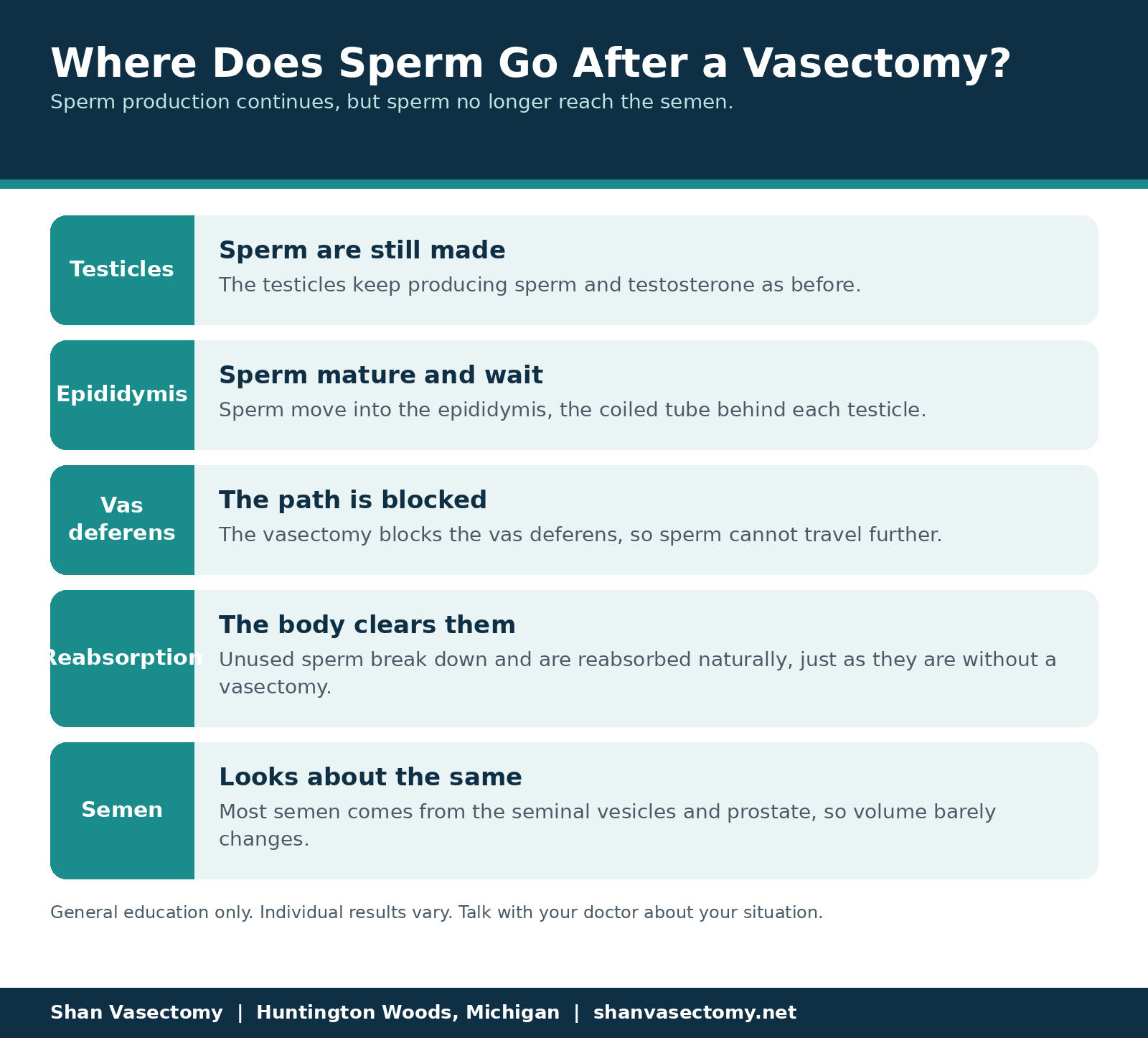
After a vasectomy, your testicles keep making sperm, but the blocked vas deferens stops it from reaching your semen. The sperm stays in the epididymis, where it breaks down and is reabsorbed by your body, just as unused sperm always is. It’s a safe, natural process that doesn’t cause harmful buildup.
How Does Sperm Normally Travel?
Before answering where does sperm go after vasectomy in detail, it helps to know the normal route. Understanding it makes it easier to see what a vasectomy changes, and what it leaves alone. If you’d like a refresher on the basics first, see what is a vasectomy.
Testicles to Epididymis
Sperm are produced in the testicles. They then move into the epididymis, a tightly coiled tube that sits along the back of each testicle. Sperm mature and are stored there. Even before a vasectomy, sperm that aren’t ejaculated eventually break down and are reabsorbed.
The Vas Deferens (the Part That Is Blocked)
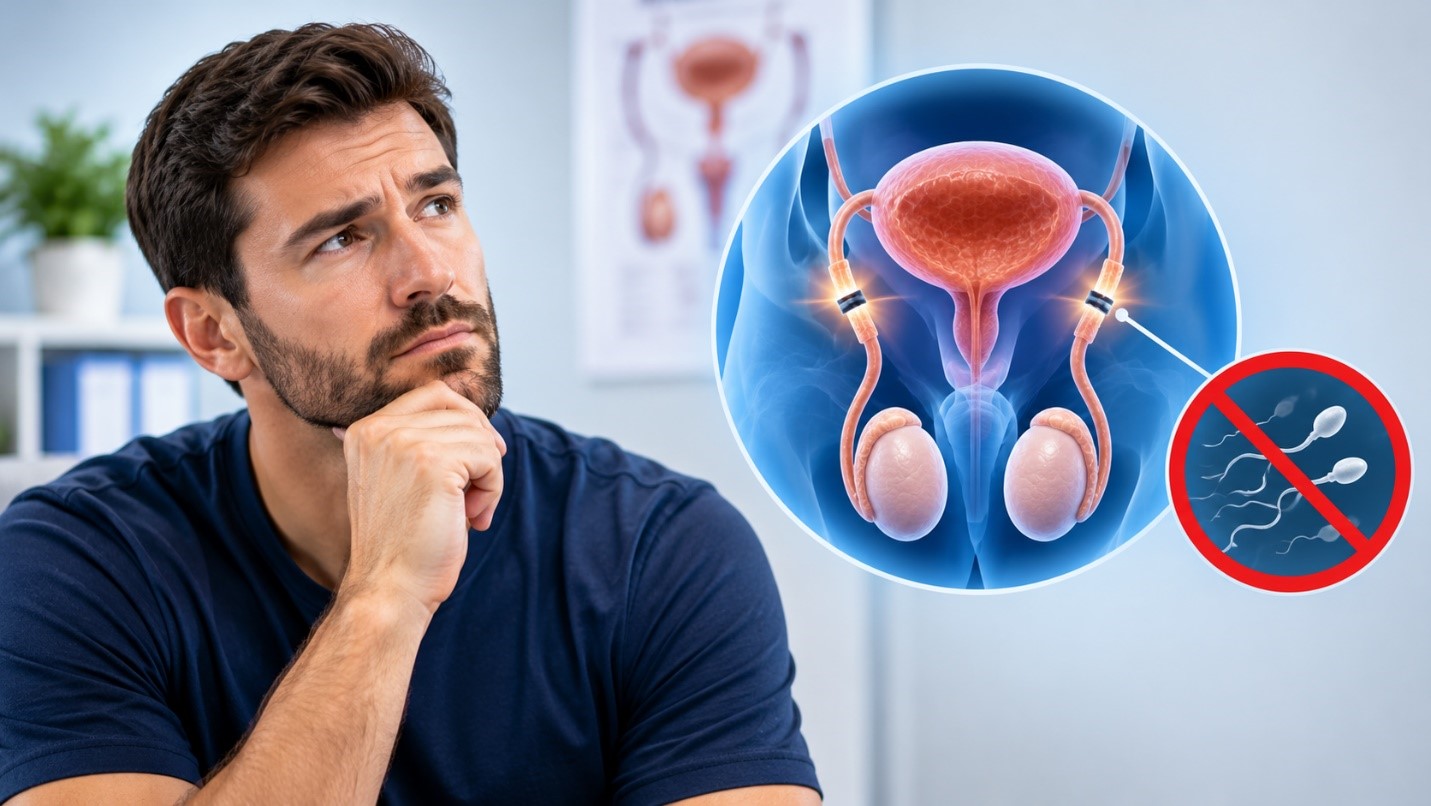
During ejaculation, sperm leave the epididymis through the vas deferens, a firm tube that runs up through the scrotum and into the pelvis. This is the only part a vasectomy changes. Each vas deferens is sealed so sperm can no longer travel beyond that point.
Seminal Vesicles and Prostate: Where Most Semen Comes From
Most of what you ejaculate isn’t sperm at all. The seminal vesicles and prostate produce the bulk of the fluid, and they sit above the blocked section. That’s why they keep working normally after a vasectomy.
What Happens to Sperm After the Vas Deferens Is Blocked?
Once the vas deferens is sealed, newly made sperm have nowhere to go except where unused sperm always end up. That’s the real answer to where does sperm go after vasectomy: back into the body’s normal recycling system.
Reabsorption by the Body
Sperm cells are broken down inside the epididymis, and the immune system clears the material. According to MedlinePlus, the testicles keep producing sperm after a vasectomy, and the body simply absorbs it. This process happens quietly and isn’t something you’ll feel.
Do the Testicles Keep Making Sperm?
Yes. A vasectomy doesn’t switch off sperm production or hormone production. The testicles continue to make sperm and testosterone, and that testosterone still enters your bloodstream as usual.
Why Does Your Ejaculate Look the Same?
Sperm make up only a small share of semen volume. Because the fluids from the seminal vesicles and prostate still flow normally, most men notice no change in how much they ejaculate, how it looks, or how it feels.
The only difference is invisible: once you’re cleared, the fluid no longer carries sperm. A lab can see that under a microscope. You won’t be able to tell by looking.
Can Sperm Build Up? Myths vs. Facts
It’s easy to imagine sperm collecting like water behind a dam. In reality, production and reabsorption reach a balance.
| Myth | Fact
|
| Sperm builds up and eventually “bursts” | The body reabsorbs sperm continuously; there’s no harmful buildup in typical cases |
| Blocked sperm causes constant pressure | Most men feel nothing; a small number notice temporary congestion that settles |
| Sperm leaks into the body and causes illness | Reabsorption is a normal process that also occurs without a vasectomy |
| You’ll stop ejaculating | Ejaculation continues normally, without sperm |
In a small number of men, sperm leaking from the cut end forms a small lump called a sperm granuloma, or the epididymis feels congested and tender. These are usually minor. Long-lasting pain is rare, and we explain it in our article on post-vasectomy pain syndrome.
What Doesn’t Change After a Vasectomy?
Once you know where does sperm go after vasectomy, the next question is usually what else changes. Quite a lot stays exactly the same. Your hormones, sex drive, erections, orgasm, and the sensation of ejaculation aren’t affected by sealing the vas deferens. Research reviewed by the Cleveland Clinic supports that a vasectomy doesn’t change testosterone or sexual performance.
For a deeper look at desire, erections, and orgasm, learn more about vasectomy and sexual function.
Why Can Sperm Still Appear for a While?
Here’s the part that surprises some men. At the moment of the procedure, sperm are already stored beyond the blocked point, in the upper vas deferens and nearby ducts. That stored sperm doesn’t disappear right away.
It takes time and a number of ejaculations to clear. That’s why we test semen at about three months and ask you to use backup birth control until then. You can learn how long sperm stays after a vasectomy and what your test results mean on our semen analysis page.
How Does This Fit Into Your Decision?
Knowing where does sperm go after vasectomy often removes a lingering worry. Your body has been reabsorbing unused sperm all along, and a vasectomy simply makes that the only path.
If you’re still weighing the decision, we’re happy to talk through the anatomy in person. Dr. Shan often sketches it out for patients during consultation, because a quick picture usually answers the question faster than any explanation.
Frequently Asked Questions
Where Does Sperm Go After a Vasectomy?
After a vasectomy, sperm can no longer travel through the sealed vas deferens. It stays in the epididymis, where the body breaks it down and reabsorbs it. This is the same process that handles unused sperm before a vasectomy, so it’s safe, and you won’t feel it.
Does the Body Keep Making Sperm After a Vasectomy?
Yes. The testicles continue producing sperm and testosterone after a vasectomy. Only the delivery route changes. Because the sperm can’t reach your semen, your body reabsorbs it instead, and hormone levels stay the same as they were before the procedure.
Does Sperm Build Up After a Vasectomy?
Not in a harmful way. Production and reabsorption balance each other out. A small number of men notice temporary congestion or develop a small sperm granuloma, which is usually minor. Persistent, life-affecting pain is rare and treatable if it does occur.
Do You Still Ejaculate After a Vasectomy?
Yes. Ejaculation feels and looks the same because most semen comes from the seminal vesicles and prostate, which aren’t affected by the procedure. After you’re cleared by a semen analysis, the fluid simply doesn’t contain sperm.
Does Semen Volume Change After a Vasectomy?
Usually not noticeably. Sperm make up only a small fraction of semen volume, so the amount you ejaculate generally looks the same. Most men can’t see any difference at all, and the color, texture, and sensation of ejaculation stay the same too.
Can Sperm Leak Out After a Vasectomy?
Sperm can’t reach your semen once you’re cleared. Occasionally, sperm leak from the cut end of the vas deferens into nearby tissue, forming a small lump called a sperm granuloma. Most are painless and harmless, but let us know if you notice a tender lump.
A Natural Process, Not a Problem
The idea of sperm “going nowhere” can sound worrying, but your body already has a built-in way to handle it. A vasectomy simply closes one route, and the body’s normal recycling takes care of the rest. Your hormones, desire, and ejaculation carry on as before.
If you’d like to see it explained and ask anything else that’s on your mind, book a consultation at our Huntington Woods clinic. Dr. Shan will walk you through the anatomy in a relaxed, private visit.
Medical disclaimer: This article is for general education and isn’t a substitute for personal medical advice. Please speak with a qualified physician about your specific health needs.