

When couples begin researching vasectomy vs. tubal ligation as permanent birth control options, the sheer volume of medical information can feel overwhelming and confusing. Both procedures are highly effective and designed to prevent pregnancy permanently, but they differ significantly in terms of complexity, recovery time, cost, and overall patient experience.
We understand that choosing a permanent contraception method is a deeply personal decision for any couple or individual. As a practice dedicated exclusively to vasectomy care in Huntington Woods, serving patients from across Michigan, we frequently speak with men and their partners who want a clear and honest comparison before deciding which person should undergo the procedure.
Understanding Each Procedure at a Glance
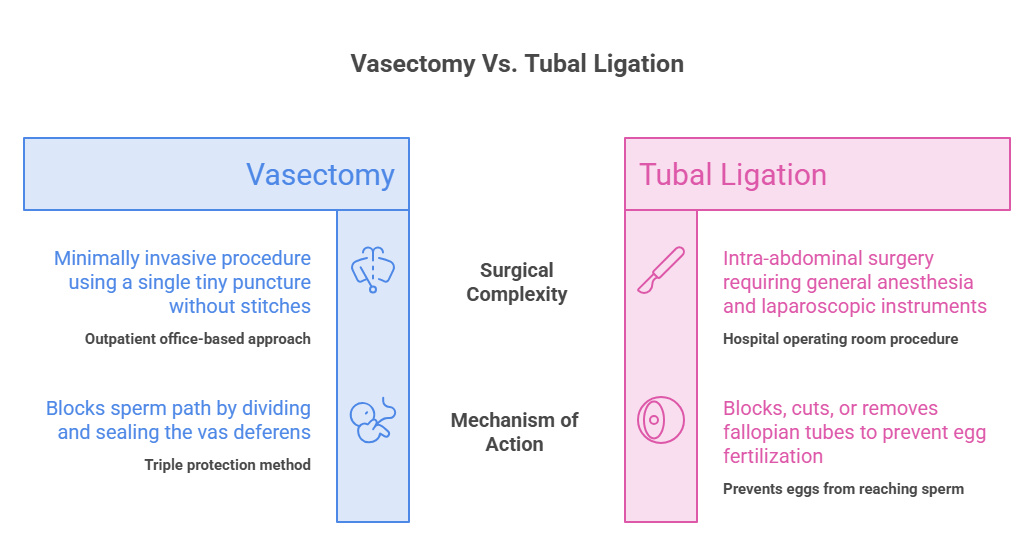
A vasectomy is a procedure that block sperm path from entering the semen by dividing and sealing the vas deferens tubes. At our clinic, Dr. Shan performs every vasectomy using a no-needle and no-scalpel technique that takes approximately 15 minutes from start to finish.
The physician uses a MadaJet pressure applicator to deliver numbing medication through the skin without a needle, then creates a single tiny puncture to access and block the tubes using a triple protection method involving cauterization, division, and a small medical clip. No stitches are needed, and the puncture closes naturally on its own within days.
A tubal ligation is an intra-abdominal surgery that blocks, cuts, or removes the fallopian tubes to prevent eggs from reaching sperm. This procedure typically requires general anesthesia and is performed in a hospital operating room by a gynecologic surgeon using laparoscopic instruments inserted through small abdominal incisions.
Many surgeons now opt for a complete bilateral salpingectomy, which removes the fallopian tubes entirely and may also reduce the woman’s future risk of ovarian cancer by roughly 50 percent.
Comparing Invasiveness and Recovery Timelines
The most striking difference in any vasectomy vs. tubal ligation comparison is the level of invasiveness involved. A vasectomy is an external procedure performed on the scrotum using only local anesthesia in a comfortable office setting, while a tubal ligation involves entering the abdominal cavity under full general anesthesia in a hospital.
- Vasectomy recovery is typically smooth and remarkably quick. Patients are advised to take rest for the first 24 hours, with ice packs applied for 15 minutes at a time,e and to wear snug supportive underwear continuously.
- Tubal ligation recovery takes considerably longer and requires more careful monitoring. Most women need at least one to two weeks before returning to normal daily activities.
The dramatic difference in downtime alone makes the vasectomy vs. tubal ligation decision straightforward for many couples who want to minimize disruption to their work schedules and family routines.
Cost and Financial Considerations
Financial planning is another area where these two procedures diverge sharply. A tubal ligation typically costs between 2000 and 8000 dollars or more because it requires an operating room, a full surgical team, an anesthesiologist, and often a hospital stay. These costs can differ depending on the geographic region, facility, and the specific surgical technique used.
In contrast, a vasectomy is far more affordable because it is completed in a comfortable outpatient office setting without the enormous overhead of a hospital environment. At our Huntington Woods practice, the flat procedure fee is 600 dollars, covering the initial consultation, the procedure itself, all medical supplies, and a follow-up visit if needed.
The PVSA kit for post-procedure semen testing is handled separately and is not included in this fee. While the clinic does not bill insurance companies directly, patients are welcome to use HSA or FSA funds to cover the cost.
For a detailed breakdown of pricing and what to expect financially, this vasectomy cost guide for Michigan patients provides transparent information to help you plan ahead with confidence.
Effectiveness and Long-Term Reliability
Both procedures are exceptionally effective at preventing pregnancy when performed correctly. According to the Mayo Clinic, vasectomy is one of the effective forms of birth control available, with a failure rate of less than 1 percent over a lifetime. Tubal ligation is also highly effective, though failure rates vary by technique and can range from 1% to 3% over a 10-year period depending on whether the tubes were clipped, burned, or fully removed.
One important distinction is the timing of effectiveness. A tubal ligation is effective immediately after surgery. A vasectomy, however, requires a mandatory waiting period. Residual sperm remain in the upper reproductive tract for several weeks after the procedure, so couples must continue using an alternative form of birth control until a post-vasectomy semen analysis confirms a zero sperm count. This follow-up testing is absolutely essential and should never be skipped.
Debunking Common Myths
Misconceptions about both procedures often cloud the decision-making process and create unnecessary anxiety for couples. Neither a vasectomy nor a tubal ligation affects hormones, sex drive, or the ability to enjoy a fulfilling intimate life. Men will continue to produce normal levels of testosterone and ejaculate normally after a vasectomy.
The only change is that the semen will no longer contain sperm, and this difference is completely unnoticeable during intercourse.
Similarly, a tubal ligation does not trigger early menopause, alter menstrual cycles, or change a woman’s hormonal balance in any way. Both procedures are purely mechanical solutions that block the reproductive pathway without interfering with the body’s natural chemistry or overall long-term health.
Frequently Asked Questions
What are the key differences between tubal ligation and vasectomy?
A vasectomy is a minor external office procedure with a quick recovery of about one week, while a tubal ligation is an intra-abdominal surgery requiring general anesthesia, an operating room, and significantly more downtime. The vasectomy is less invasive, less expensive, and carries fewer surgical risks overall.
What is the 120 rule for tubal ligation?
The 120 rule is an outdated medical guideline that hospitals and physicians used through the 1960s and 1970s to determine whether a woman qualified for a tubal ligation. The rule required that a woman’s age multiplied by the number of children she had must equal at least 120. This restrictive policy has long been abandoned in modern medicine.
Is it better for a husband to get a vasectomy or for the wife to get her tubes tied?
A vasectomy is generally considered the better and safer choice for most couples because it is simpler, less invasive, less expensive, and more effective than a tubal ligation. The recovery period is also dramatically shorter, allowing the male partner to return to normal activities within days rather than weeks.
Does either procedure protect against sexually transmitted infections?
Neither a vasectomy nor a tubal ligation provides any protection against sexually transmitted infections. Both procedures are designed solely for permanent pregnancy prevention. Couples who need STI protection should continue using barrier methods regardless of which sterilization procedure they choose.
Finding Clarity in Your Family Planning Journey
Evaluating vasectomy vs. tubal ligation ultimately comes down to understanding the real-world differences in safety, cost, recovery, and everyday convenience. For the vast majority of couples, the vasectomy offers a faster, gentler, and far more affordable path to permanent birth control without sacrificing effectiveness or long-term peace of mind.
If you and your partner are ready to explore this simple 15-minute procedure with a physician who has performed over 900 vasectomies, we encourage you to reach out to Shan Vasectomy in Huntington Woods to schedule your consultation and take the next step together.