Roughly 500,000 American men choose vasectomy each year, yet many still walk into a consultation unsure whether they are getting the older surgical approach or the modern no-scalpel technique. That confusion matters, because the two methods are not interchangeable in terms of recovery time, complication risk, or patient comfort. If you are researching no scalpel vasectomy options in Michigan, this guide gives you the direct, specific comparison you need to make a confident decision.
Table of Contents
- What Is a No-Scalpel Vasectomy?
- What Is a Traditional Vasectomy?
- Quick Takeaways
- Key Procedure Differences You Actually Feel
- Recovery Comparison: No-Scalpel vs Traditional
- Complication Rates and What the Data Shows
- Side-by-Side Procedure Comparison
- Cost and Access in Michigan
- Choosing the Right Provider in Michigan
- Frequently Asked Questions
- References
What Is a No-Scalpel Vasectomy?

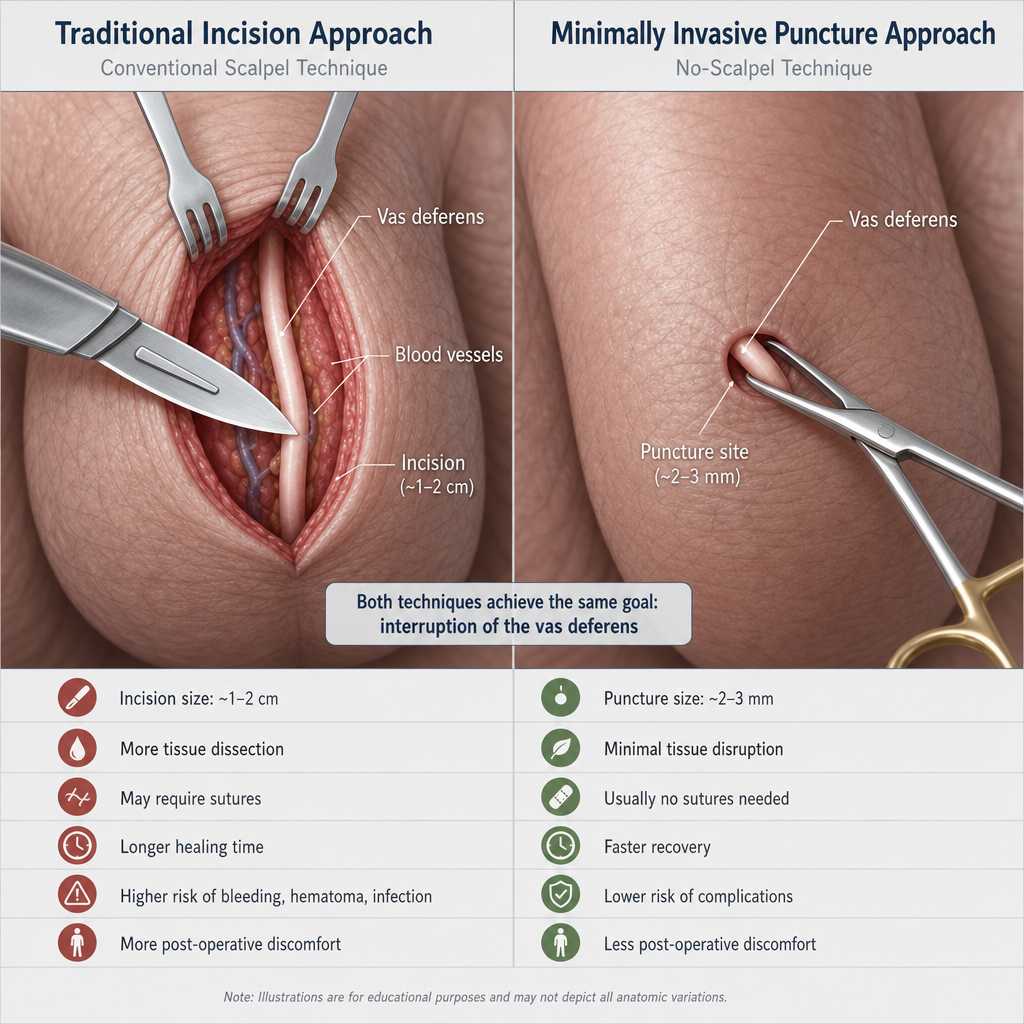
A no-scalpel vasectomy is a minimally invasive procedure developed in China in the 1970s by Dr. Li Shunqiang and later introduced to the United States in 1988 by Dr. Marc Goldstein at Cornell. Instead of making one or two incisions with a scalpel, the urologist uses a small sharp-tipped instrument called a hemostat to puncture the skin of the scrotum, stretching a tiny opening rather than cutting tissue.
The vas deferens, the tube that carries sperm, is then lifted through that small opening, cut, and sealed. The puncture is so small it typically requires no sutures and closes on its own within a few days. At a clinic like Shan Vasectomy in Huntington Woods, this technique is the standard of care, not an upgrade you have to ask for.
What Is a Traditional Vasectomy?
The traditional vasectomy uses a scalpel to make one or two small incisions in the scrotal skin, usually between 1 and 2 centimeters each. The surgeon reaches through these cuts to locate, cut, and seal each vas deferens. The incisions are then closed with dissolvable sutures.
This approach has been performed safely for decades and is still considered effective. The issue is not whether it works. The issue is that the no-scalpel method accomplishes the same outcome with measurably less tissue trauma, less bleeding, and a faster return to normal activity. Continuing to use the traditional approach when a better option exists is a choice, not a medical necessity.
Quick Takeaways
| Key Insight | Explanation |
|---|---|
| No-scalpel means no cutting of the skin | A sharp puncture replaces a scalpel incision, reducing bleeding and tissue damage significantly. |
| Complication rates are lower with the no-scalpel method | Studies show hematoma and infection rates are roughly half those seen with traditional incision vasectomy. |
| Recovery is faster with the no-scalpel approach | Most men return to desk work within 48 hours and physical labor within 5 to 7 days. |
| No-needle anesthesia adds another layer of comfort | A pressurized jet delivers local anesthetic without a needle stick, eliminating the sharpest moment of discomfort. |
| Effectiveness is identical between methods | Both approaches achieve a failure rate of less than 1 in 2,000, so technique does not change long-term success. |
| Flat-rate pricing removes hidden costs | At Shan Vasectomy, the $600 flat fee covers consultation, the procedure, and all follow-up visits with no surprise billing. |
| Michigan men have direct access to no-scalpel specialists | Dr. Thulasi Shanmukanathan performs no-scalpel, no-needle vasectomy at the Huntington Woods clinic, serving the greater Detroit metro area. |
Key Procedure Differences You Actually Feel
When men ask about the difference between these two approaches, they are really asking one question: how much is this going to hurt? The honest answer is that the no-scalpel method produces less discomfort at every stage of the procedure, and the data on complication rates backs that up.
The Anesthesia Step
In a traditional vasectomy, local anesthetic is delivered via a syringe needle directly into the scrotal tissue. For most men, this is the worst moment of the entire procedure. With no-needle anesthesia, a MadaJet or similar pressurized injector disperses the anesthetic through the skin using air pressure. There is a sensation of pressure, not a needle sting. At Shan Vasectomy, both the no-scalpel technique and no-needle anesthesia are standard, which means patients are not paying extra for a gentler experience.
The Skin Entry Step
The traditional scalpel incision cuts through skin, subcutaneous tissue, and sometimes underlying fascia. Each layer needs to be separated and later sutured. The no-scalpel puncture stretches the same tissue layers without severing them. Stretched tissue heals faster than cut tissue, has fewer nerve endings disrupted, and produces less post-procedural swelling.
The Vas Deferens Occlusion Step
Both methods use the same techniques to block the vas deferens, including cutting, cauterizing, tying, or a combination. This step does not differ meaningfully between approaches. The variation in patient experience comes entirely from how the surgeon accessed the vas, not from what they did to it once found.
Pro tip: Ask any vasectomy provider in Michigan which specific occlusion method they use. The most reliable approach combines excision of a small vas segment with mucosal fulguration (burning the inner lining) and fascial interposition. This combination carries the lowest published failure rate.
Recovery Comparison: No-Scalpel vs Traditional
Recovery is where the two methods diverge most noticeably in a patient’s day-to-day experience. Traditional vasectomy typically involves 3 to 5 days of significant soreness, some bruising, and a recommendation to avoid any physical exertion for up to a week. Sutures add a minor maintenance requirement and occasionally cause local irritation before dissolving.
With a no-scalpel vasectomy, the puncture site is roughly the size of a ballpoint pen tip. Most patients at Shan Vasectomy report manageable soreness for 24 to 48 hours, with the majority returning to sedentary work within two days. Physical laborers or men who exercise heavily typically need 5 to 7 days before returning to full activity.
What to Expect in the First 72 Hours
Ice applied intermittently during the first 24 hours reduces swelling effectively. Supportive underwear matters more than most men expect. Scrotal support keeps the area from moving, which directly reduces pain. Over-the-counter ibuprofen handles post-procedural discomfort for most patients without requiring prescription pain medication.
When You Need a Follow-Up Semen Analysis
Neither method provides instant sterilization. Sperm remain in the reproductive tract downstream of the vasectomy site and must be cleared through ejaculation over several weeks. A follow-up semen analysis at approximately 8 to 12 weeks, or after roughly 20 ejaculations, confirms zero sperm count. This step is included in the Shan Vasectomy flat fee, which means there is no reason to skip it.
Pro tip: Do not assume you are sterile before getting a confirmed zero sperm count result. Unintended pregnancies after vasectomy most often occur because men skipped the follow-up analysis and resumed unprotected sex too soon.
Complication Rates and What the Data Shows
The clinical literature on vasectomy complications is consistent and well-established. According to research published through the American Urological Association and summarized by the National Institutes of Health, the no-scalpel technique reduces hematoma formation (blood pooling under the skin) by approximately 50 to 60 percent compared to the traditional incision method. Infection rates follow a similar pattern.
“The no-scalpel vasectomy technique is associated with fewer complications, less bleeding, less pain, and faster recovery than the conventional incision technique, without any compromise in efficacy.” – American Urological Association Foundation, Guidelines on Vasectomy
Hematoma is the most common serious complication from any vasectomy approach, occurring in 1 to 2 percent of traditional procedures versus roughly 0.5 percent with the no-scalpel method. Infection rates for traditional vasectomy run between 1.5 and 3 percent; for no-scalpel procedures, published figures are consistently below 1 percent.
Chronic scrotal pain, sometimes called post-vasectomy pain syndrome, affects an estimated 1 to 2 percent of vasectomy patients regardless of technique. This is not a differentiating factor between methods, but it is worth knowing before you schedule.

Side-by-Side Procedure Comparison
The table below compares the no-scalpel vasectomy, the traditional incision vasectomy, and the no-scalpel plus no-needle combination offered at Shan Vasectomy. All three are effective permanent contraception methods, but the differences in patient experience are real and documented.
| Feature | Traditional Vasectomy | No-Scalpel Vasectomy | No-Scalpel, No-Needle Vasectomy (Shan Vasectomy) |
|---|---|---|---|
| Skin entry method | Scalpel incision (1-2 cm) | Sharp puncture, no cutting | Sharp puncture, no cutting |
| Anesthesia delivery | Needle injection | Needle injection (usually) | Pressurized jet, no needle |
| Sutures required | Yes, dissolvable stitches | Rarely needed | Rarely needed |
| Hematoma rate | 1-2% | Approx. 0.5% | Approx. 0.5% |
| Typical return to desk work | 3-5 days | 1-2 days | 1-2 days |
| Procedure duration | 20-30 minutes | 15-20 minutes | 15-20 minutes |
| Long-term effectiveness | Less than 1 in 2,000 failure | Less than 1 in 2,000 failure | Less than 1 in 2,000 failure |
| All-in cost at Michigan specialist | Varies widely, often $800-$1,500+ | Varies by provider | $600 flat (consultation, procedure, follow-up) |
Cost and Access in Michigan
Vasectomy pricing in Michigan is inconsistent. Some urology practices bill the consultation separately, charge facility fees on top of the procedure, and send a third bill for the semen analysis follow-up. Men who thought they were paying $600 sometimes end up with invoices totaling well over $1,200 after insurance adjustments and unbundled fees.
Shan Vasectomy’s flat rate of $600 covers the consultation, the no-scalpel no-needle procedure itself, and all required follow-up visits including the semen analysis. There is no facility fee, no anesthesiologist bill, and no surprise invoice. For men paying out of pocket or navigating high-deductible insurance plans, this pricing model removes a significant source of stress.
How Shan Vasectomy Compares to Other Michigan Providers
Other Michigan vasectomy providers, including those serving the Metro Detroit area, offer vasectomy services but vary in technique, pricing transparency, and specialization level. A urologist who performs vasectomies as a small fraction of their overall practice is not the same as a physician whose clinic is dedicated exclusively to this procedure. Specialization matters because volume drives proficiency, and proficiency drives outcomes.
Dr. Thulasi Shanmukanathan at Shan Vasectomy performs exclusively no-scalpel, no-needle procedures. The clinic is built around this single service, which means every aspect of the patient experience, from scheduling to post-procedure care, is designed for vasectomy patients specifically.
Choosing the Right Provider in Michigan
The technique matters, but so does the person performing it. When evaluating vasectomy Michigan providers, there are three questions worth asking before you book an appointment.
How Many Vasectomies Does the Provider Perform Per Year?
Volume is a legitimate quality indicator in procedural medicine. A provider performing 200 or more vasectomies annually has encountered a much wider range of anatomical variation than someone doing 20. Ask directly. A confident, experienced provider will answer without hesitation.
Is No-Scalpel the Default, or an Upgrade?
Some practices still offer traditional vasectomy as their default and position no-scalpel as a premium service. Given that no-scalpel has been the recommended standard since the late 1980s, any clinic still defaulting to the traditional approach deserves scrutiny. At Shan Vasectomy, no-scalpel and no-needle are simply how the procedure is done, not an option you have to negotiate for.
What Does the All-In Cost Actually Include?
Get a written breakdown before you commit. Confirm that the follow-up semen analysis is included. Confirm there is no separate facility fee. Confirm that if you need a second follow-up visit, it is covered. Transparency in pricing is a reasonable expectation, and practices that cannot provide a clear answer before the procedure are unlikely to be clearer when the bills arrive.
Frequently Asked Questions
Is a no-scalpel vasectomy less effective than a traditional vasectomy?
No. Both methods achieve the same long-term effectiveness, with failure rates below 1 in 2,000 when performed correctly with a reliable occlusion method. The difference between the two approaches is entirely in the patient experience, recovery, and complication risk, not in the contraceptive outcome.
How long does a no-scalpel vasectomy take at Shan Vasectomy?
The procedure itself typically takes 15 to 20 minutes. When you include check-in, preparation, and post-procedure instructions, plan for roughly 45 minutes to an hour at the clinic. The $600 flat rate at Shan Vasectomy covers this visit, the consultation, and all follow-ups.
Will I feel pain during a no-scalpel vasectomy?
With no-needle anesthesia and the no-scalpel technique, most men report feeling pressure rather than sharp pain. You may feel a mild ache or tugging sensation when the vas deferens is manipulated, which is normal. The absence of a needle injection and a scalpel incision eliminates the two most commonly reported sources of procedural discomfort in traditional vasectomy.
How soon can I have sex after a no-scalpel vasectomy?
Most providers recommend waiting at least 5 to 7 days before resuming sexual activity. More importantly, you must continue using contraception until a follow-up semen analysis confirms a zero sperm count, which typically happens at 8 to 12 weeks post-procedure. Skipping the semen analysis is the single most preventable cause of vasectomy failure.
Does insurance cover no-scalpel vasectomy in Michigan?
Many insurance plans cover vasectomy, but coverage varies widely. Some plans have high deductibles that make out-of-pocket payment more practical. Shan Vasectomy’s $600 flat fee is often comparable to or less than the out-of-pocket cost under many deductible structures, making it worth calculating both paths before assuming insurance is the better route.
What is the recovery difference between no-scalpel and traditional vasectomy for someone with a physical job?
For men doing manual labor, construction, or heavy lifting, the no-scalpel method offers a meaningful advantage. Traditional vasectomy typically requires 7 to 10 days before returning to strenuous physical work. With the no-scalpel approach, most men with physical jobs return to full activity within 5 to 7 days. Scheduling the procedure on a Thursday gives most men a full work week of recovery before returning to labor-intensive work the following week.
Is vasectomy reversal possible if I change my mind?
Vasectomy reversal is technically possible through microsurgery, but it is expensive (often $5,000 to $15,000), not consistently covered by insurance, and success rates decline with time since the original vasectomy. Vasectomy should be approached as a permanent decision. If you have significant doubts about future family planning, that conversation should happen before scheduling, not after.
If you have been through a no-scalpel vasectomy procedure yourself or are currently weighing your options in Michigan, share your questions or experience in a comment below. Real patient perspectives help other men make better-informed decisions.
References
- National Institutes of Health research database covering clinical studies on vasectomy techniques, complication rates, and no-scalpel procedure outcomes
- American Urological Association guidelines and clinical practice recommendations for vasectomy procedures including no-scalpel technique standards
- Centers for Disease Control and Prevention data on contraceptive use, vasectomy prevalence, and reproductive health statistics in the United States
- Planned Parenthood educational resources on permanent contraception options including vasectomy procedure details and effectiveness data
- Mayo Clinic patient education content on vasectomy procedure steps, recovery expectations, and comparison of surgical approaches