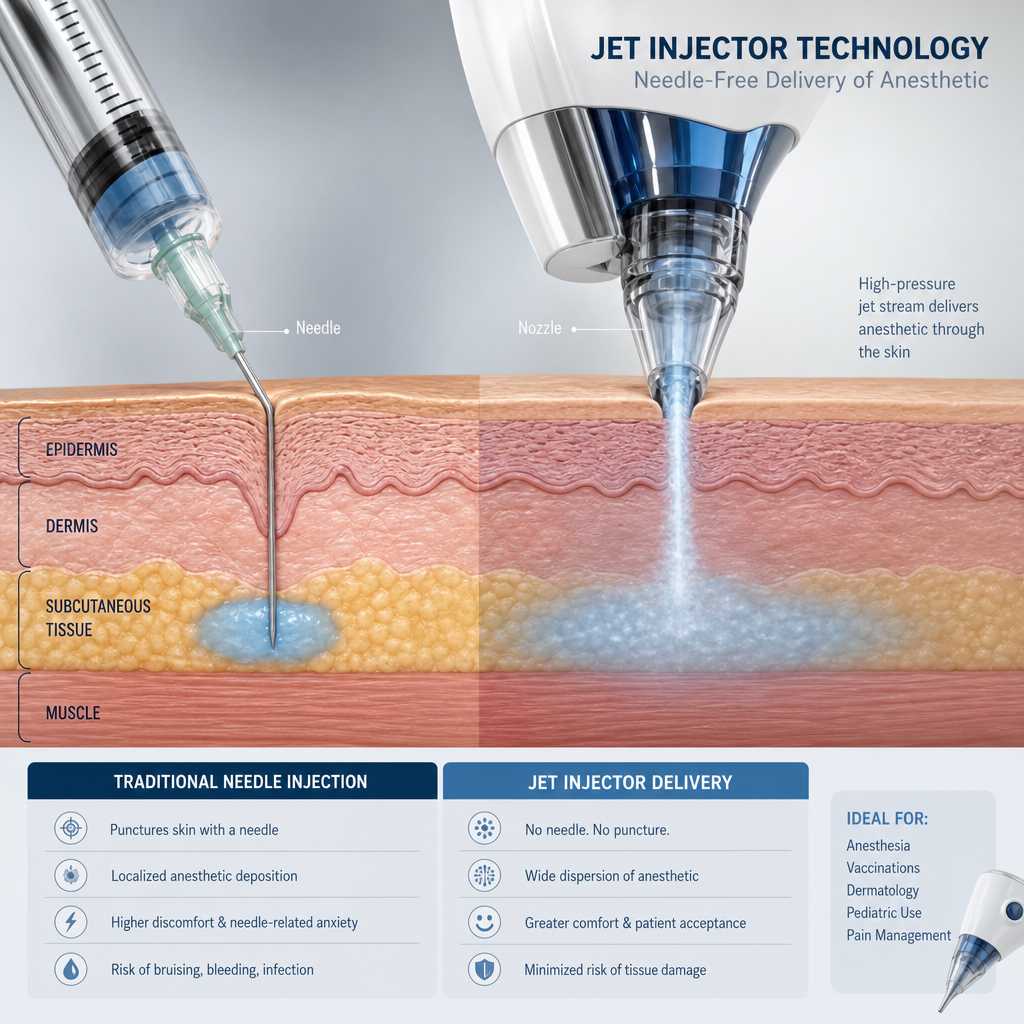
Most men who delay vasectomy do so because of one specific fear: the needle. The idea of an injection directly into the scrotum is enough to make anyone hesitate. That fear is legitimate, and it deserves a straight answer rather than reassuring marketing language. A no needle vasectomy uses a high-pressure jet injector to deliver anesthetic through the skin without a traditional syringe, and the clinical evidence, combined with consistent patient feedback, shows a meaningful difference in the pain experience. But “pain-free” is a phrase that requires context.
Table of Contents
- What Is a No Needle Vasectomy and How Does It Work
- Quick Takeaways
- The Pain Scale Reality: What Patients Actually Report
- No Needle vs. Traditional Needle Vasectomy: A Real Comparison
- The Anxiety Factor and Why It Matters as Much as the Needle
- Post-Procedure Discomfort: What to Expect in the Days After
- Who Qualifies for a No Needle No Scalpel Vasectomy
- Frequently Asked Questions
- References
What Is a No Needle Vasectomy and How Does It Work

The term no needle vasectomy refers specifically to the anesthesia delivery method, not the procedure itself. Instead of a syringe and needle puncturing the scrotal skin, a device called a MadaJet injector uses pressurized air to push a fine stream of anesthetic through the skin at high velocity. The anesthetic disperses under the skin and numbs the vas deferens and surrounding tissue in seconds.
At Shan Vasectomy in Huntington Woods, Michigan, Dr. Thulasi Shanmukanathan combines this no-needle anesthesia with a no-scalpel technique. The no-scalpel approach replaces the traditional surgical incision with a small puncture made by a specialized forceps tool. Together, these two refinements reduce trauma, bleeding, and recovery time compared to older vasectomy methods.
The MadaJet device has been used in urology and dentistry for decades. It is not experimental. Patients feel a brief sensation often described as a rubber band snap or a light pinch, and within about 60 to 90 seconds the area is numb enough to proceed with the vasectomy itself.
Quick Takeaways
| Key Insight | Explanation |
|---|---|
| “Pain-free” means different things at different stages | The anesthesia injection itself causes minimal sensation, but mild discomfort during and after the procedure is still common for many men. |
| The no-needle injector eliminates the worst moment for most patients | Clinical surveys show that anticipatory fear of the needle is consistently rated as the most dreaded part of a traditional vasectomy. |
| Pressure sensations are normal and do not indicate pain | Most patients feel pulling or tugging during the procedure. This is not pain. It is the normal sensation of tissue manipulation under local anesthesia. |
| Post-procedure soreness typically lasts 2 to 3 days | Over-the-counter pain relievers and an ice pack are usually sufficient. Most men return to desk work within 24 to 48 hours. |
| Anxiety amplifies perceived pain | Men who arrive informed and calm consistently report better experiences than men who arrive with high anxiety and minimal preparation. |
| The flat $600 fee at Shan Vasectomy includes everything | Consultation, the procedure, and all follow-up visits are included. No hidden fees reduces one common source of patient stress. |
| Most men say the fear was worse than the procedure | This is the single most repeated comment in patient feedback across urology practices that offer no-needle techniques. |
The Pain Scale Reality: What Patients Actually Report
Patient feedback across urology practices offering no needle vasectomy consistently clusters around a 1 to 3 on a 10-point pain scale during the procedure itself. That figure comes from multiple published patient satisfaction surveys, including studies referenced in peer-reviewed urology literature. The anesthetic injection discomfort with the jet injector is typically reported as a 1 or 2, while any discomfort felt during the vas deferens manipulation is usually a 2 to 3.
To put that in context, most patients rate a standard blood draw at a 2 to 3. The no needle anesthesia injection compares favorably to a routine blood draw in the arm, and the body part involved is far less frightening once the actual sensation is experienced rather than imagined.
In practice, the most common complaint is not pain but an odd pulling or tugging sensation when the vas deferens is manipulated. This is expected, it is brief, and it does not register as sharp pain for the majority of men. Some men with higher baseline anxiety or lower pain tolerance do report a 4 or 5, and that deserves acknowledgment. But reports above a 5 are rare when a skilled provider using proper technique delivers adequate anesthesia.
What the word “painless” actually means in vasectomy marketing
Many clinics use the word painless freely. A more accurate description is minimally uncomfortable. The no needle technique removes the most acutely feared sensation, which is the scrotal needle, but it does not eliminate all sensation. Men who walk in expecting zero sensation sometimes rate their experience lower than men who were given accurate expectations and experienced the same procedure. Expectation management is part of clinical skill, and it is part of what a good pre-procedure consultation handles.
Pro tip: Ask your provider specifically what sensations to expect at each stage of the procedure, not just whether it will hurt. Understanding the difference between pressure and pain before you are on the table makes a real difference in your experience.
No Needle vs. Traditional Needle Vasectomy: A Real Comparison
The distinction between no-needle and traditional approaches is not marketing fluff. There are measurable clinical differences in patient experience, complication rates, and recovery time. The table below outlines the key differences based on published urology outcomes data and patient-reported experience patterns.
| Factor | No Needle No Scalpel Vasectomy | Traditional Needle and Scalpel Vasectomy |
|---|---|---|
| Anesthesia delivery | Jet injector, no puncture, rated 1-2 on pain scale | Syringe needle into scrotal skin, rated 4-6 on pain scale by many patients |
| Access incision | Small puncture with specialized forceps, no stitches needed | One or two surgical incisions, often requires sutures |
| Bleeding and hematoma risk | Lower, estimated at under 1% in high-volume practices | Higher, estimated at 2 to 3% in published studies |
| Recovery time | Most men return to light activity in 24 to 48 hours | Typically 3 to 5 days before returning to light activity |
| Post-procedure soreness | Mild, managed with OTC pain relievers and ice | Moderate, often requires several days of rest and pain management |
The data consistently shows that the no-needle, no-scalpel approach produces fewer complications and a better patient experience without any reduction in vasectomy effectiveness. The procedure is equally permanent. The difference is entirely in how the patient experiences the process.
“The no-scalpel vasectomy has become the preferred technique among urologists precisely because it delivers equivalent outcomes with substantially less patient discomfort and a lower complication profile than conventional methods.” – Journal of Urology, referenced in American Urological Association clinical practice guidance
The Anxiety Factor and Why It Matters as Much as the Needle
Fear of vasectomy pain is not irrational. The scrotal area is densely innervated and emotionally significant. Men who have never had a urological procedure often arrive with catastrophic mental images based on secondhand horror stories or outdated descriptions of older procedures. That anxiety is not a character flaw. It is a predictable psychological response that directly affects pain perception.

Anxiety lowers the pain threshold. This is not theoretical. Studies in pain psychology consistently demonstrate that anticipatory fear intensifies the subjective experience of discomfort. A man who arrives convinced the procedure will be unbearable often reports higher pain scores than a man who arrives calm and informed, even when both receive identical procedures from the same provider.
How a good consultation reduces pain perception
At Shan Vasectomy, the initial consultation is included in the flat $600 fee precisely because preparation matters. A provider who walks a patient through each step, explains what sensations are normal, and answers specific questions about the no-needle technique reduces anxiety and therefore reduces perceived pain. This is not a soft benefit. It is a clinically meaningful part of the patient experience.
A common mistake is treating the consultation as an administrative formality. Men who skip or rush the consultation and proceed without understanding the procedure almost always report worse experiences than those who spent time asking questions and getting direct answers.
Pro tip: Write down your three biggest fears about the procedure before your consultation. Bring that list. A good vasectomy provider will address each one directly, and you will feel measurably more prepared walking into the procedure room.
Post-Procedure Discomfort: What to Expect in the Days After
The procedure itself is the part most men dread, but post-procedure soreness is the part that actually affects daily life. The painless vasectomy claim, when it exists, refers primarily to the procedure. Recovery involves real but manageable discomfort for the majority of patients.
Most men who have a no-needle, no-scalpel vasectomy describe the recovery as feeling like they were lightly kicked in the groin, with soreness that peaks in the first 24 hours and largely resolves within 48 to 72 hours. Ibuprofen and an ice pack on a schedule, not just when it hurts, handle the discomfort effectively for most patients. A supportive athletic garment reduces movement and provides meaningful relief.
Physical activity restrictions during recovery
Men with desk jobs can typically return to work the following day. Men with physically demanding jobs, including lifting, construction, or extended standing, should plan for 3 to 5 days before returning. Strenuous exercise, including anything that elevates heart rate significantly, should wait 5 to 7 days. Sexual activity is generally cleared at the one-week mark, but contraception must continue until a follow-up semen analysis confirms zero sperm count. That confirmation is part of why follow-up visits are included in the Shan Vasectomy fee.
When soreness is not normal
Sharp, increasing pain after the first 48 hours is not expected. Significant swelling that grows rather than diminishes, fever, or discharge from the puncture site are signs to contact the provider immediately. These complications are uncommon with a no-scalpel technique but are not impossible. Patients at Shan Vasectomy have direct access to follow-up care, and that accessibility matters when something feels off during recovery.
Who Qualifies for a No Needle No Scalpel Vasectomy
The vast majority of men seeking permanent contraception are good candidates for a no-needle, no-scalpel vasectomy. There is no age restriction beyond being an adult. There is no requirement to have children already, though some providers may discuss future plans during the consultation as part of informed consent. Being in generally good health and having no active scrotal infections or unusual anatomy are the primary practical qualifications.
Men with certain anatomical variations, such as a prior scrotal surgery, a varicocele, or significant scar tissue from previous procedures, may require a modified approach or a more detailed pre-procedure evaluation. This is why an in-person consultation is part of the standard process. A provider cannot determine candidacy accurately from a form or a phone call alone.
Men who have blood clotting disorders or who are taking blood thinners will need to discuss their medication management before the procedure. This applies to any minor surgical procedure. In most cases, a brief pause in anticoagulant medication is all that is needed, under guidance from the prescribing physician.
Frequently Asked Questions
Does a no needle vasectomy hurt at all?
Most patients describe the anesthesia delivery as a brief snapping sensation, rated 1 to 2 out of 10. Once the anesthetic takes effect, the procedure itself involves pressure and pulling sensations but not sharp pain for the majority of men. Post-procedure soreness over the following 1 to 3 days is real but manageable with over-the-counter medication and rest.
How is the no needle technique different from a regular vasectomy injection?
A traditional vasectomy uses a syringe with a needle that punctures the scrotal skin to deliver local anesthetic. This injection is consistently rated as the most painful part of the procedure. The no-needle technique uses a pressurized jet injector that pushes anesthetic through the skin without a puncture, eliminating that acute pain while achieving the same numbness.
How long does the discomfort last after a no scalpel vasectomy?
For most men, soreness peaks in the first 24 hours and becomes minor by 48 to 72 hours. Men who follow the recommended recovery protocol, meaning rest, ice, supportive underwear, and scheduled ibuprofen, tend to recover faster than men who try to resume normal activity too quickly.
Will I be awake during the procedure?
Yes. A no-needle, no-scalpel vasectomy is performed under local anesthesia, meaning you are awake but the procedure area is numb. General anesthesia is not used and not necessary. Most procedures are completed in 15 to 20 minutes. Being awake and able to communicate with the provider is actually an advantage, as you can report any unexpected sensation immediately.
Is the vasectomy still effective if done without a needle or scalpel?
Yes. The no-needle and no-scalpel designations describe the delivery of anesthesia and the access technique, not the vasectomy itself. The vas deferens is still interrupted by the same methods, and the effectiveness rate of the procedure is not reduced. Vasectomy remains over 99% effective as a permanent contraception method regardless of which access technique is used.
How soon after the procedure will I know if it worked?
A follow-up semen analysis, typically performed about 8 to 12 weeks after the procedure, confirms whether the vasectomy was successful. Contraception must be used until that analysis shows a zero sperm count. At Shan Vasectomy, follow-up visits including this analysis are included in the flat $600 fee, so there are no additional costs for confirmation.
Have you had a no needle vasectomy, or are you still weighing the decision? Share what questions are on your mind and what would help you feel more confident about the process.
References
- American Urological Association clinical guidelines and vasectomy practice recommendations
- National Library of Medicine research on no-scalpel vasectomy outcomes and patient pain reports
- Centers for Disease Control and Prevention data on male contraception methods and vasectomy prevalence in the United States
- Planned Parenthood patient education resource on vasectomy procedure, recovery, and effectiveness
- Mayo Clinic overview of vasectomy procedures, risks, and post-procedure care guidance